
A pivotal 2026-27 season approaches for the Utah Jazz, who hope that four years of nearly constant roster reshaping has left them with a core that can start to build toward something. Since February 2022, the club has made a remarkable 27 total trades, with individual player rights being assigned to or from the Jazz 70 times. The result of all of that movement is this mix of established stars, developing youngsters and veteran contributors. Utah hopes this group can congeal into a playoff team. Click the profiles below to learn more about the 2027-27 Utah Jazz.

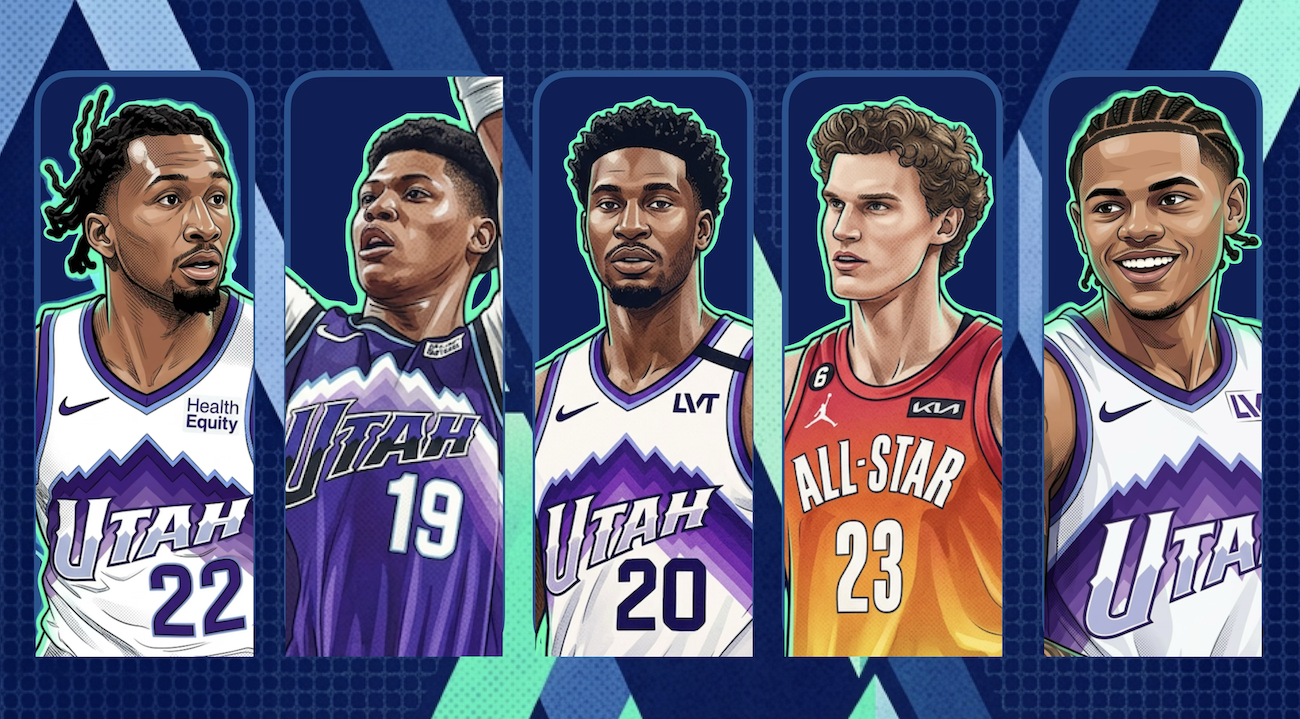
Utah's offensive star
has an elite combination of scoring volume and efficiency, making him the fulcrum of the offense — with or without the ball.


Markkanen only appeared in 42 games last season, but posted the highest scoring average of his career (26.7) and with 60-plus true shooting. He was pacing for another 100-dunk, 200-three season — it would have been the second in league history, his own '22-23 season being the first — but didn't play in March or April. His 3-point shooting actually dipped as Utah encouraged him to be audacious with his shot diet, but he countered that with his most efficient season ever at the rim and by getting to the line a ton.
The Finnish forward will be the focal point of Utah's offensive structure again. A full season alongside Jaren Jackson Jr. means that Markkanen will likely go back to playing the lion's share of his minutes as a supersized wing, which was his primary role in 2022-23 when he earned All-Star honors and won Most Improved Player.
He'll also shift up to the four when Jackson sits, but the beauty of Markkanen's game is that he defies positional definition. Checking him with bigs is problematic because of his constant movement and perimeter shooting; guards struggle with his size. He does need to get better at post-ups as a means of punishing smaller guys, but the bottom line is that Markkanen poses a ton of really hard questions for opponents.
If the Jazz realize their goals this season, it will likely mean Markkanen has had another All-Star or even All-NBA type season. The closest he came to the latter was in 2022-23, when he finished 17th in voting for 15 spots.
Only six NBA players have matched Markkanen's scoring (23.7), true shooting (61.7%) and games (210) over the past four years, and all six are perennial All-NBA types: SGA, Jokic, Durant, Steph, Giannis, Kawhi.
Markkanen has only eclipsed 2,000 season minutes once since his rookie campaign.

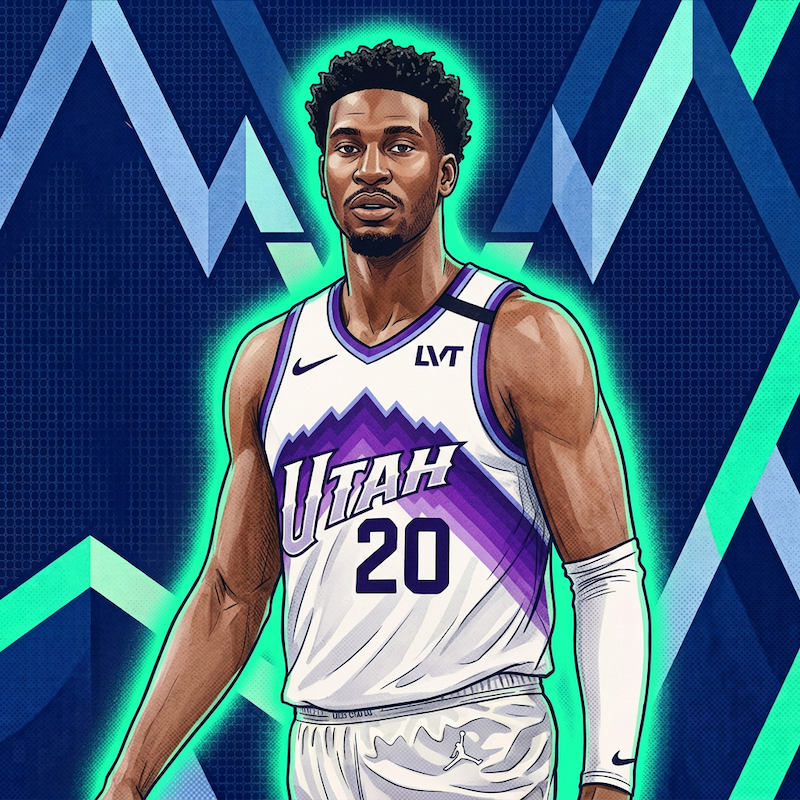
Two-way star with size,
capable of all-world defense ('23 DPOY) and real scoring punch (19ppg career), including with some self-creation.
Jackson was having another strong season despite Memphis' overall struggles: 19.2 points, and he was holding opponents under 53% at the rim. But then upon his trade to the Jazz, imaging revealed some benign growths in JJJ's knee that he and the Jazz opted to clean up since Utah wasn't playoff-bound anyway. That meant his first Jazz season amounted to just three games, but it was an auspicious start: three straight games with 22+ points and the Jazz posted defensive ratings of 105, 107 and 92 in those three games (albeit against middling to bad offensive teams).
Team president Austin Ainge continually refers to Jackson and Markkanen as the Jazz's two best players. Jackson (like Markkanen) topped out at 17th in All-NBA voting. He's made all-defense three times, and he's also a capable scorer. His best scoring seasons were 22.5, 22.2 and last year's combined 19.4. He makes a decent amount of threes, but what really makes him stand out among big men is his ability to put the ball on the deck. Last year, he scored 8.1 of his nightly points on drives, third most by a player 6'11" or taller, behind only KD and Giannis.
On defense, "Trip" makes opponents' lives harder in the paint, but is also switchable and can impact guys in space. That's why the Jazz don't necessarily want to park him at the rim on defense. In fact, Jackson has done some of his best work collaborating with behemoth bigs who took some of the traditional center type stuff off his plate.
At just 27 years old, Jackson has a lot of his prime still in front of him. He has three years left on his contract, plus a player option.
Jackson is the first player ever at 6'11" or taller to make 140 threes in a season in which he also earned all-defensive honors.
For his size, Jackson isn't the strongest rebounder. His rebound rate of 10.8% last season would have placed him 42nd out of the 47 players 6'9" or taller to qualify for the rebounding leaderboard.
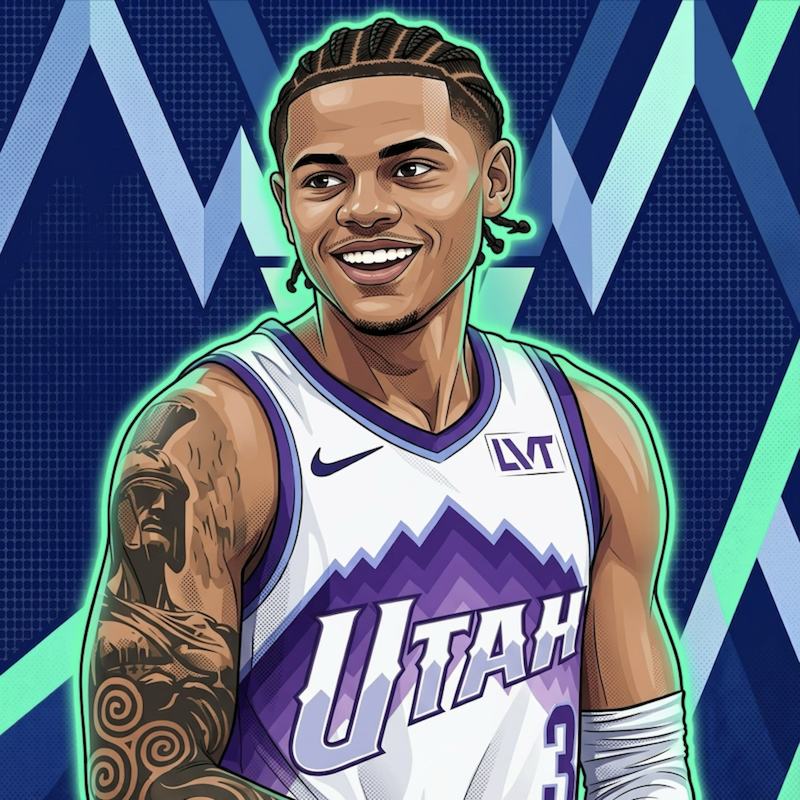
The rising playmaker
found another gear in 2025-26, improving his shooting, decision-making, rim finishing, foul drawing and leadership.
It would be hard to overstate just how right George's third season went from a development standpoint. After two years as a low-efficiency gunner without a true position, he improved in almost every way imaginable. He solidified his outside shooting (37%, including a ton off the dribble) but perhaps more importantly reached an elite level for a guard in terms of rim finishing and foul drawing. From mid-November through the trade deadline he averaged 25 a game and shot over 40% from deep. The Jazz used him sparingly after that, but that stretch was enough to score him a big extension that will keep him under contract for six more seasons.
With Jackson and Markkanen figuring more prominently into the Jazz's plans, they might not need George to average 23.6 points again. That's even more true if rookie Darryn Peterson is ready for a big role right away, or if Ace Bailey has a year-two leap.
But either way, George is essential since Utah's best offensive players are still dependent scorers to a degree. The need for a legitimate table-setter is obvious. The next step for George, beyond making easy A-or-B reads our of pick-and-roll action; is to be a real game manager, with a feel for who needs to get more involved on a team with multiple threats. That's a tougher version of the floor general role, but George spent the summer connecting with his All-Star teammates to figure out how he can magnify them.
Advanced stats are still cautious about quantifying Key's impact on winning. Guards with more modest statlines like Jalen Suggs, Dyson Daniels and Devin Vassell rate much better in all-in metrics. That's why it will be fascinating to see how the year unfolds for George now that the Jazz will be competing.
Only eight guards have reached 20 ppg and 60% true shooting in one of their first three seasons.
Per Cleaning the Glass, the Jazz defense got 6.7 points worse per 100 possessions with Key on the floor, the biggest delta on the team.
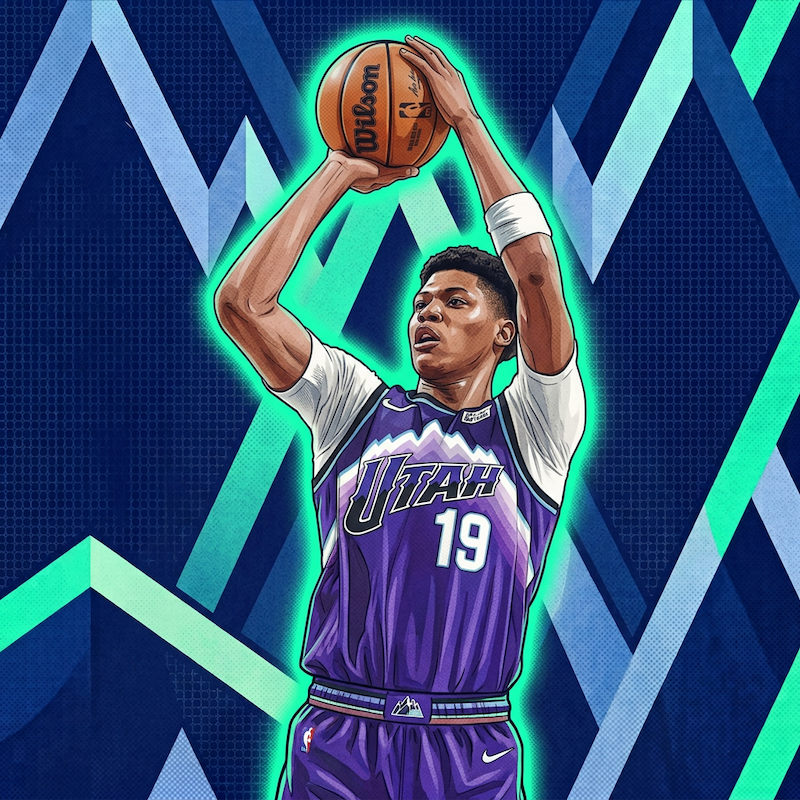
The sky's the limit
for this tantalizing talent with athleticism and a silky touch, who can play a supporting role or have stuff run for him.
The NBA is a tough place for teenage rookie wings. Even several eventual star wings had pretty modest rookie seasons when they debuted that young, including some Bailey has been compared to: Paul George (7.8 ppg as a rookie), Tracy McGrady (7.0), Rashard Lewis (2.4), to name a few. Bailey's 13.8 rookie scoring average is pretty promising. As other players were shut down, the Jazz began to run some of their core actions for Bailey, and he got increasingly comfortable making decisions with and without the ball.
Bailey figures to be one of Utah's most important pieces this season, whether he starts or comes off the bench. He led the team in minutes last year, including shifting into a more featured role as Utah slid him into some of their "Lauri actions" after the All-Star was put on the proverbial shelf.
The 20-year-old just remains too tantalizing not to play him major minutes. He can play multiple positions, his defensive instincts are good, and offensively he has a feathery touch and great footwork. (Check this video thread from late March.) He's toolsy and effortlessly athletic.
At 6'9", he could also solve some really important defensive questions for the Jazz. Utah doesn't really have a ton of plus wing defenders in their core group, so that could be his path to becoming indispensable. Jackson already lauded him early in training camp for screen navigation and defensive effort. Either way, expect a massive role for Bailey this year. The Jazz remain high on the 2025 lottery pick.
Among teenage rookie wings over 6'7", only Carmelo Anthony, LeBron James, Cooper Flagg and Jayson Tatum scored more than Bailey's 993 total points.
An improvement in Bailey's 30% corner 3-point shooting from last year would go a long way to help the Jazz offense.
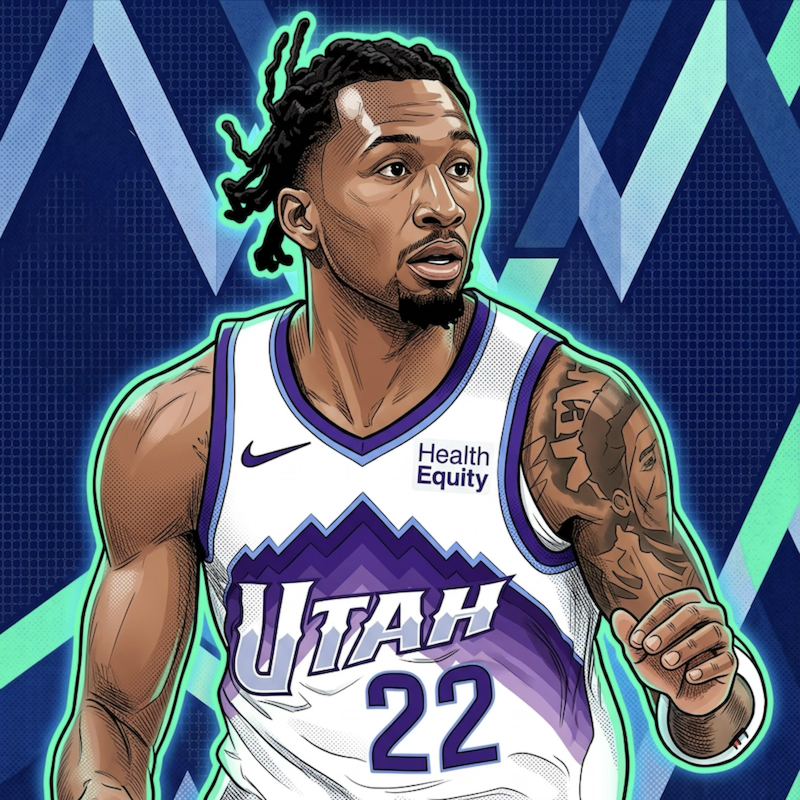
Potential franchise-changer
who could define Utah's long-term vision if his elite shot-making talent and creation ability translate to the NBA.
Peterson was an automatic and diverse scorer when he was on the court for Kansas last season. He only played 697 total minutes, and in some games checked himself out due to a cramping issue he subsequently attributed to supplements. Still, the scoring ability is undeniable, which is why Peterson was in the mix for the No. 1 overall pick. He sported high usage, solid efficiency, and a wildly positive net rating. Stylistically, he drew comparisons usually considered blasphemous.
The Jazz won't say it exactly this way for fear of putting too much pressure on a teenager, but they are hoping this season will lay a foundation for Peterson that will ultimately yield a title alpha. Unleashing that type of player in year one is incredibly rare, though, so be prepared to have patience.
Peterson has a lot to work with. There will be some fun moments, and the Jazz seem to want to give him as much responsibility as he can handle. We've seen him in preseason have a healthy mix of off-ball and on-ball work. Hardy has complimented Peterson's maturity, process and coachability. Playing alongside George means he won't have to orchestrate an offense right away, but expect to see him featured prominently.
Remember that Kobe Bryant — who Peterson idolizes and to whom he's been compared — averaged 8-2-1 counting stats as a teenage rookie guard. Devin Booker (14-3-3), Bradley Beal (14-4-2) and LaMelo Ball (16-6-6) produced more, although they were on rebuilding teams. The very best seasons by rookie guards in their teens belonged to Luka Doncic (21-8-6) and Kyrie Irving (19-4-5), but again, they didn't arrive to teams with multiple established All-Stars. This year is about figuring out how his tools translate.
While his isolation abilities are tantalizing in the long term, his off-ball threat should make him a piece right away: 65.5% effective field goal percentage on all catch-and-shoot jumpers at Kansas.
He had as many assists in a single Summer League game as he had combined in his THREE highest assist games of his entire season at Kansas. The 1.0 assist-to-turnover ratio could be a sign that he's not a full-time playmaker yet.
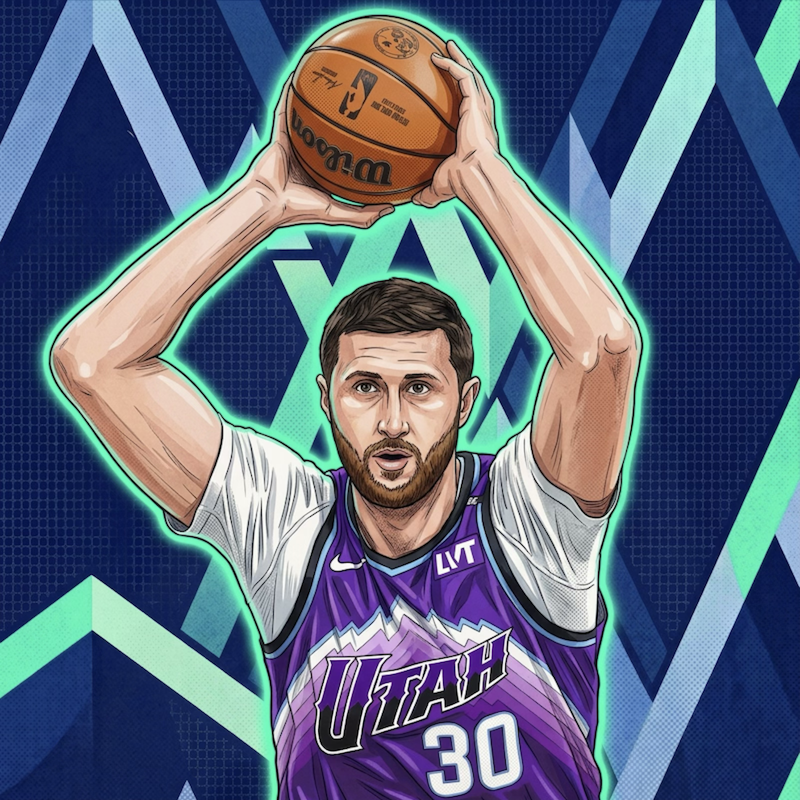
This picking, passing center
can be a hub on offense with his vision and gobbles up rebounds, but doesn't put a ton of pressure on the rim.
It's a testament to Will Hardy's creativity that for a random stretch in the winter when other guys were out, he retooled the offense completely around Nurkic as a high post hub. It also shows how delightfully unique the Bosnian is. Nurk became the starter when Walker Kessler's season ended early, and provided a reliable enough option for Utah's offense and defense to make sense. He averaged a double-double and raved about the organization, and they brought him back on a sub-midlevel deal.
Kessler's departure leaves the Jazz in need of a starting big, Nurk has started 83% of his NBA games. He does certain things really well, and Hardy has spoken very highly of the impact he has on the offense as a screener and his commitment to other winning activities like rebounding. Because of what he offers that the Jazz need post-Kessler, he figures to play a fairly central role.
They'll need him to rehabilitate his weird rim finishing issue. His 57.4% inside three feet last year is not just weirdly low for a 7-footer; it's legitimately one of the 15 lowest figures by ANY size player to log at least 1,000 minutes. That lack of rim pressure is partly why the scoring efficiency dropped in his minutes, even while the assist ratio went up. On defense, Nurkic is more of a paint clogger than a true rim protector. Guys shot 60.3% at the rim with Nurkic defending last year, which is not Jackson- or Kessler-level, but it's a little better than average for a big.
When Nurk was on the floor last year, opponents' OReb% dropped by 8.7%. Only Zach Edey had a bigger impact on that stat.
The Jazz get to the rim significantly less when Nurkic is on the floor, and him converting at a 57.4% in that area doesn't really help loosen up the defense.
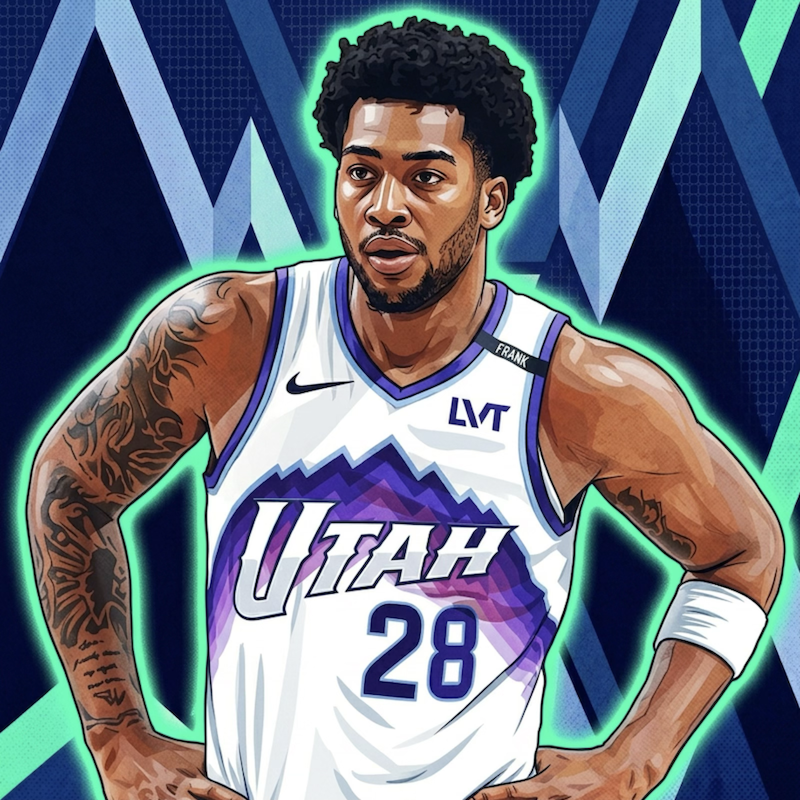
A scorer's scorer
who has shot 38% from deep in his career, Sensabaugh has also had a chance to be featured as a self-creator on recent Jazz squads.
Qualitatively, Sensabaugh's third season felt a lot like the one prior, but his stats continue a steady upward climb. His 14.9 points made him Utah's third highest qualifying scorer, and he largely sustained his overall efficiency despite some 3-point regression. He nearly doubled his foul drawing rate and had his most accurate season ever for non-rim twos. The rest of his game (rebounding, passing, defense) didn't change materially, but him showing his offensive game can project out to a bigger role is a positive development.
Early reviews on Sensabaugh's offseason work have been positive, and it sounds like he is expected to be a rotation contributor. For all of its talent upgrades, this Jazz team is still a little light on self-creation, so having a bench scorer who can iso his way to buckets is a commodity.
In terms of Sensabaugh's long-term fit, he still has some work to do to show he's more than the basketball equivalent of "designated hitter." The defensive stats have looked bleak at times, but he says that was a focal point in his summer workouts. His rebound rate, assist rate, and steal/block percentages have been pretty flat throughout his career. He has competition now for wing minutes and may need to show progress in those other areas to secure Hardy's trust.
His 3-point shooting might have slipped a bit, but 54.3% accuracy on long twos is a sign of a scoring specialist.
Opponents shot 4% better than their expected field goal percentage when Sensabaugh was guarding, per NBA.com.
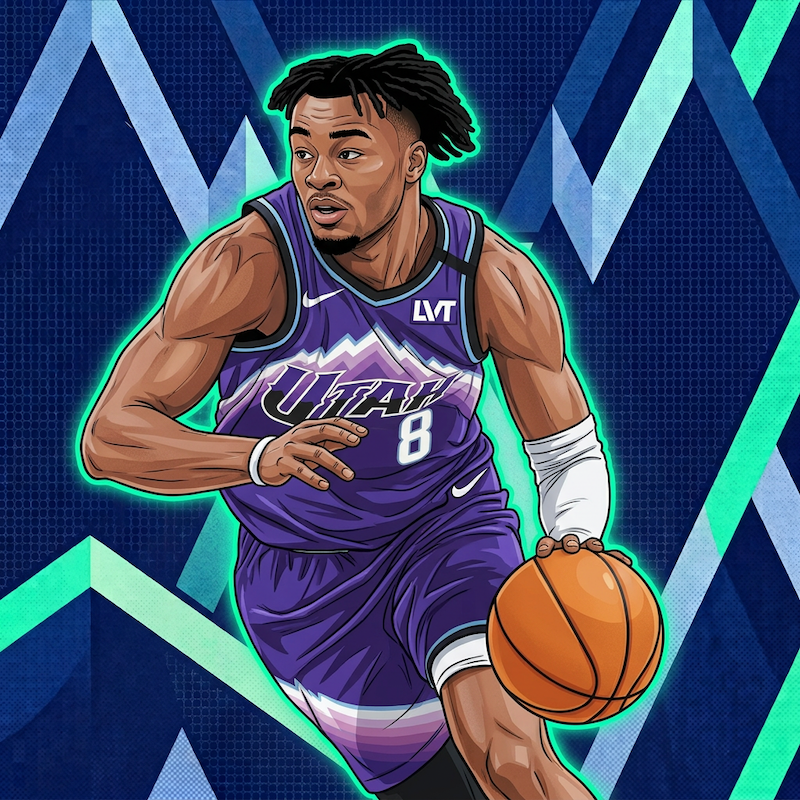
Paint-breaking bulldog
whose speed and strength on straight-line drives create opportunities to score or dish, although the shooting issues persist.
Collier took a step forward by leaning into his strengths. No, his 3-point shooting didn't get much better, but he realized he didn't need that to become essentially a league-average efficiency guy: 11.7 points on 57% true shooting. He shot an unreal 80% at the rim, and even brought his floater range (3 to 10 feet) percentage up to 49%. He draws fouls easily because of his strong straight-line drives, and he had the highest assist total by a Jazz player since 1992 when he doled out 22 helpers in a February game.
Eventually, the shooting is going to have to improve at least a little bit. Weirdly, his pull-up 3s are at least passable at 35%, but the sub-23% catch-and-shoot number looks like a typo. Defenses can't ignore you if you have the ball. But over time, more ball handling will shift to Peterson, Bailey and others. At some point, Collier is going to need to be able to bag a few catch-and-shoots if he's going to be on the floor in the playoffs.
For now, though, Collier is a rotation lock because he makes the Jazz better in specific ways they need. They're still light on creation and passing, and "Zay" (as the fellas call him) just kind of bullies his way into the paint and then makes good reads. His foul-drawing rate is also great, trailing only George's, although he needs to cash in on a higher percentage of the resulting free throws.
Collier has had 39 games with 9+ assists. That's 10th most in the NBA over his two-year career, and the nine guys ahead of him are all full-time starters.
Only six players this century have shot below 26% from three through their first two seasons on a minimum of 250 attempts... including two Jazzmen (Collier and the now departed Cody Williams).

This steady journeyman
brings solid shooting and understands his place in the system on both ends, giving him a shot at real rotation minutes.
Mykhailiuk had his best season for minutes per game, points per game, and blazing efficiency: 62.6% true shooting. He might not replicate shooting at quite that level since it was such an outlier year, but he has definitely found a sweet spot with his role in Utah. A lot of it was the 40.8% 3-point shooting (45% from the corners), but honestly, Utah's past experiments with him running as a quasi-point guard have equipped him a great feel for the system, which has made him a solid connector.
If you're budgeting minutes at the SG and SF spots, it starts to get tricky fast. Markkanen, Bailey, Peterson and Sensabaugh are all pretty easy bets to play, which realistically leaves at most one spot for a 2/3. That means Mykhailiuk's case for minutes could be intertwined with Josh Okogie's, and even Josh Green's. Obviously more guys will pop in and out of the rotation through the regular course of injuries, illness, rest, struggles, etc.
That said, Hardy has obviously come to trust his understanding of the Jazz's playbook and defensive philosophies. He doesn't grade out as a superb individual defender by all-in metrics, but Utah consistently guards better when he's on the floor.
Last year's efficiency differential with Mykhailiuk on the court was +8.0 compared to when he sat, with both the offense and defense performing better.
Svi's rebound percentage (5.8%) was one of the five lowest by a 6'7" or taller player with at least 1,000 minutes last season.
A high-energy scrapper
who uses his big body and good lateral movement to pester ball handlers, although he can improve elsewhere.
Okogie was the seventh man on a solid playoff team, using his +8 inch wingspan (7'2" compared to his listed height of 6'4") to give the Rockets plus defense and decent spot-up shooting. He was best at guarding isolations, and also well above average guarding P&R handlers and handoff shooters. On the other end, his 38.5% outside shooting was a career best, but mostly he was a low-usage (11.3%) enabler on that end.
Utah has a lot of wing options, but given the questions about their perimeter defense, it seems inevitable that Okogie will find his way to minutes at some point. One of his nicknames is "Non-Stop" for his ceaseless energy and irritation of opposing ball handlers. He's also one of few current Jazzmen to have tasted the postseason in a rotational role.
Since leaving Minnesota, he has consistently averaged between 16 and 19 minutes for the Suns, Hornets and Rockets. Eventually, he may find his way to a similar workload in Utah, even if to start the season he's jostling with other veteran wings.
Okogie held opponents to .53 points per isolation opportunity last year, good for the 99th percentile.
More curious than concerning, but Okogie hasn't made an unassisted 3-point shot in two seasons.
Bouncy lob target
whose athleticism made him a 2019 mid-lottery pick before he settled into a role as a backup big for the Pels and Lakers.
Hayes played an 18-mpg role for the 4th-seeded Lakers last year. He skews a little more traditional as a big man: more than two thirds of his shots were at the rim last season, and practically everything he took was in the paint. His efficiency is unreal as a result, but it's a little bit of a mirage since his entire shot diet is made up of dunks and short paint stuff. Defensively, he does OK as a paint protector: 55.8% rim defense is not quite in Kessler or Jackson territory, but it will help.
The need for a backup center means Hayes is practically guaranteed some kind of role on this team. The Jazz aren't going to force Jackson to slog through too many minutes as the lone big, and anyway Nurkic is likely to miss games at some point.
He's also an interesting contrast to Nurkic. It might not hurt to have a lob specialist opposite the somewhat rim-averse Nurk in the center rotation. He's also a little more defensively stout than the Bosnian, although he wound up not being quite the shot blocker he was projected to be pre-draft. Some of that is because he was foul-happy early and had to learn not to lunge at everything. But he does limit opponents' paint accuracy. On the other hand, he's not quite the screener, rebounder or especially passer than Nurkic is. They are really quite opposite as centers go.
Of his 198 made field goals last season, 122 were dunks.
Among all active players, Hayes has the 10th highest number of fouls committed per 100 possessions.

A tweener big with skills
who quickly established himself with his vision and smarts, but is still figuring out where he fits best at the NBA level.
Flip finished second in total minutes for the Jazz, including starting in 41 of his 77 contests. It's probably meaningful that he was Hardy's choice to start in the super-big starting lineup combo of Markkanen-Flip-Kessler before the latter hurt his shoulder. That trio was pretty elite early on (+28 per 100), which might actually point to how to maximize Filipowski — more on that below. Overall, Flip progressed in season two.
The question that will determine whether Flip plays a big role this year is essentially: what is he? If he's exclusively a power forward, then the path to minutes is harder, because Utah has two All-Stars who are at least part-time fours. But to play the five consistently, he'd have to improve his pretty bleak rim defense numbers: 70.1% allowed as a rookie, 71.8% last year. Filipowski at the 5 last year just wasn't a winning configuration: -10.7 per 100, per Cleaning the Glass.
Perhaps the recipe is for him to play as the nominal five, but alongside Jackson. Memphis used a similar tactic when pairing Trip with stretchy big Santi Aldama. Those two had a +24.0 net rating in Jackson's first All-Star season, and +4.6 in the second. It worked (to varying degrees) because Aldama is more than a mere "stretch" five. Aldama shared some of Flip's passing ability and they have similar rebound rates — whereas Jackson with a popping five who doesn't rebound as well (like Jay Huff) just didn't yield the same results.
After being drafted in the second round, Filipowski has the seventh most NBA points, third most rebounds and even the eighth most assists of any of his fellow 2024 draftees.
That 71.8% rim FG% allowed we mentioned above was the worst by a center with at least 150 rim contests.
A high motor and huge wingspan
help Green to bottle up rival guards, and he has also improved as a shooter, including on deep playoff runs.
After starting roughly half of his career games through fives seasons, Green came off the bench for all 58 games in Charlotte last year, but was a useful 3-and-D piece when he did play. In almost 16 minutes per game, he had his best 3-point shooting season yet at 42%, while still providing the perimeter defense that's been his calling card.
As detailed above, the Jazz have more rotation-caliber wings than they can really play, and that could make it tough for Green to carve out a big role. If he does crack Utah's rotation, it will be because they need wing stoppers. Green has elite lateral mobility, a 6'10" wingspan and solid instincts, and could help the Jazz on nights when none of the young guard corps of George, Peterson, Collier, etc. know what to do with a given star ball handler.
He has more playoff experience than any Jazz player outside of Jackson and Nurkic (by minutes played), but the reality is that unless he meaningfully cracks the rotation, his salary could wind up being useful in a midseason trade. Utah doesn't really have guys in that salary range (other than a prized rookie and a pretty essential starting center), so any trade idea that involves a player making $20M+ is likely going to implicate the Australian guard.
Green's improvements from outside made him a 99th percentile wing for overall eFG% last year (63.3%).
He doesn't rebound super well for a player of his size and length: a career rebound percentage of 6.7%.
Go-go gadget length
is Bamba's calling card, with a superhuman 7'10" wingspan, but he has spent his 8 years mostly on the edges of a rotation.
Bamba played just four games last year, including two while on a 10-day contract with the Jazz. The year before that he only saw action 32 times, so you have to go back pretty far to find a decent sample size. Utah liked his defensive paint presence and crazy per-minute rebounding rate enough to bring him back for another extended tryout, although only $500K of his salary is guaranteed.
By making the roster, Bamba locked up a salary guarantee that is basically the same as paying him a prorated miniimum for 25 days — through game 13. In other words, there's not a lot of risk to keeping him for now, unless something more tempting comes available. The security blanket of more big man depth is probably important since the starting big is 32 years old and is already banged up. There just aren't a lot of inspiring centers left as free agents. (No, Kevin Love is not a center.)
Bamba is theoretically a shooting five (he shot 39% from deep for Philly a couple of years ago), although he has basically stopped taking threes at this stage in his career. Really, the value proposition at this point is that Bamba makes it pretty hard for opponents to score in the paint, and he can catch lobs.
In his last two seasons combined (36 games, four teams), Bamba has allowed just 50.4% at the rim.
Mostly it's just really hard to thrive without continuity; since leaving Orlando, Bamba has has six teams in 3.5 seasons.
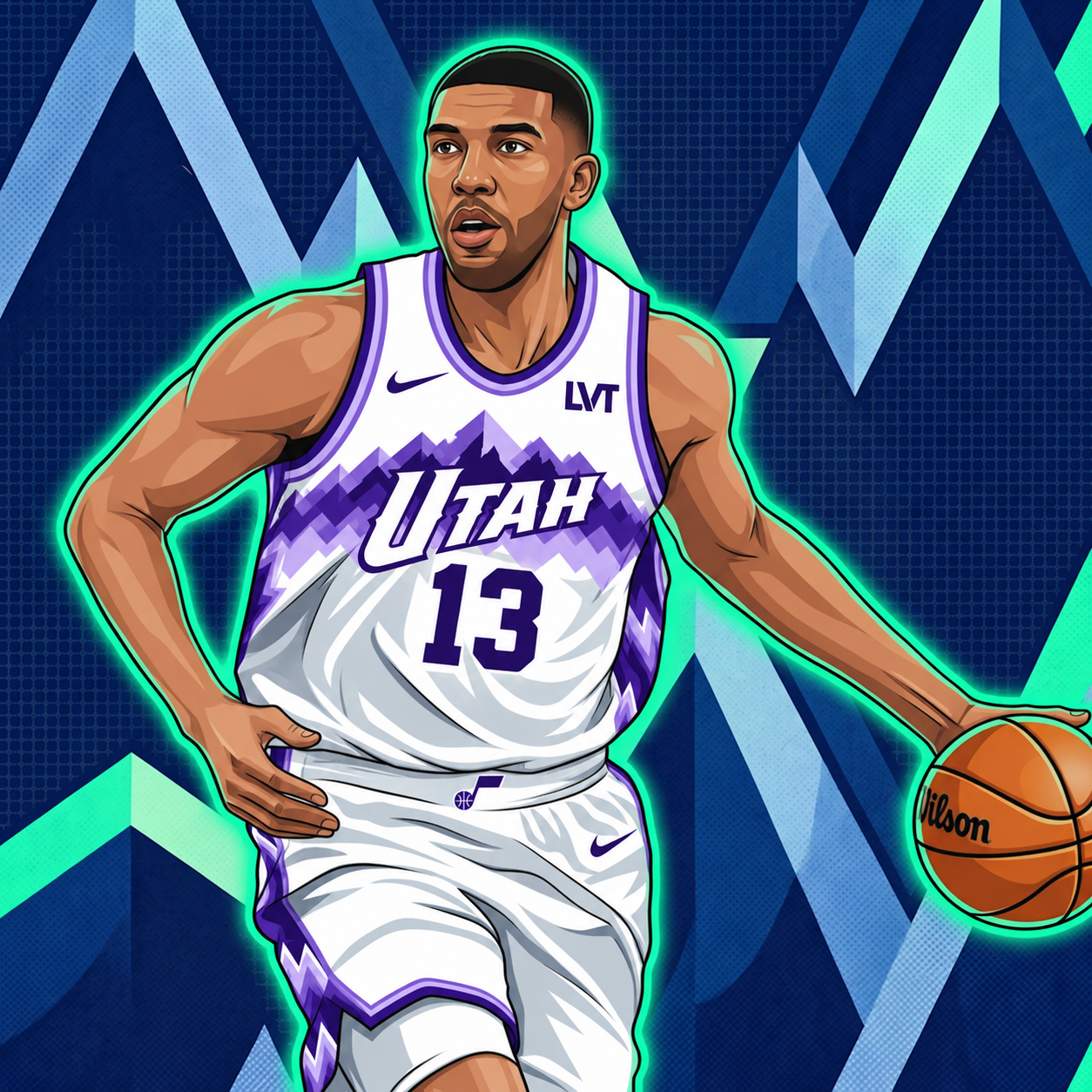
A long rebounding specialist
with enough touch around the rim to produce efficiently as a roller and putback guy in limited minutes.
Bradley spent part of the season in a bench big role with the Pacers, but as they got healthy again they did some roster spot shuffling and Bradley was the odd man out. Then he signed signed late in the season with Atlanta, reuniting with past Jazz coach Quin Snyder.
The Jazz claimed Bradley's non-guaranteed contract off waivers to have a little bit more big man insurance with Nurkic out. If, say, Hayes turned an ankle things could get dicey fast. Utah could obviously wait until there's an emergent need, but acquiring someone now gives them someone they'd prefer as opposed to settling for whatever might be available in the middle of a season.
That said, it's hard to imagine the Jazz keeping Bamba and Bradley past whatever the duration of Nurkic's injury winds up being. Bradley is a solid rebounder (career 19% Reb%) and is selective enough about his shots to have a career .641 true shooting mark. The question will be whether he can leverage this extended tryout to push himself ahead of Bamba in Utah's big man pecking order.
Per BRef, the average distance of a Tony Bradley shot in his 8 seasons has been 5.8 feet from the basket.
He had just eight dunks in 450 minutes last season, weirdly low for someone whose whole offensive arsenal is P&R finishing.
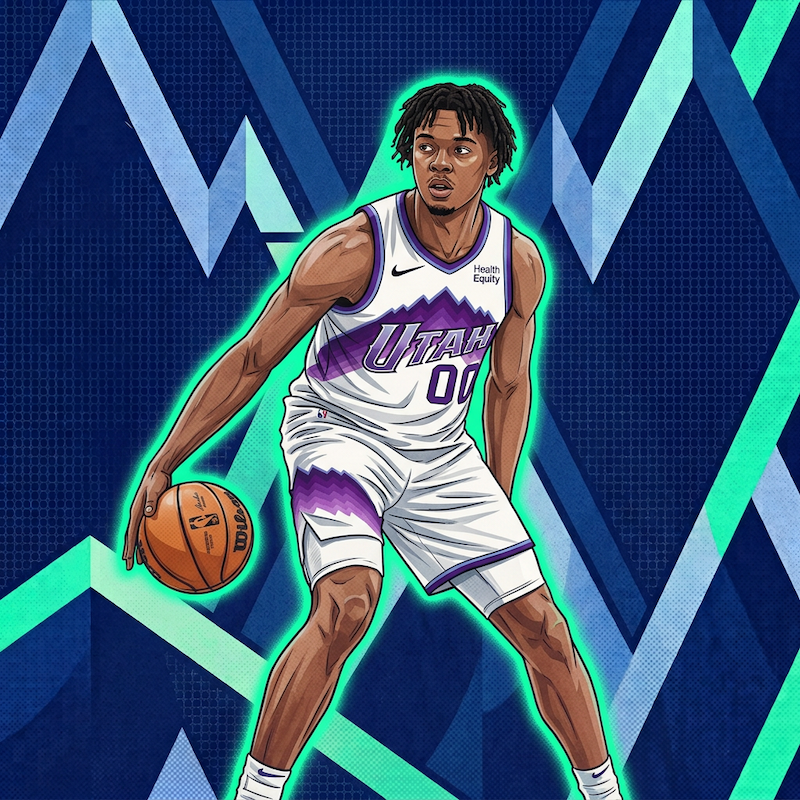
A meaty tweener forward
who showed off his basketball IQ and pro-ready body in college but has only played 12 NBA games in two years.

Ingram saw just 35 minutes as a rookie and 26 the year after, but the Jazz liked him enough in camp to shuffle their 2-way spots to keep him. His rebounding and physical defense will need to carry over from college for him to have a long NBA career, but the body is there, and his college film shows a smart player with some secondary playmaking chops.
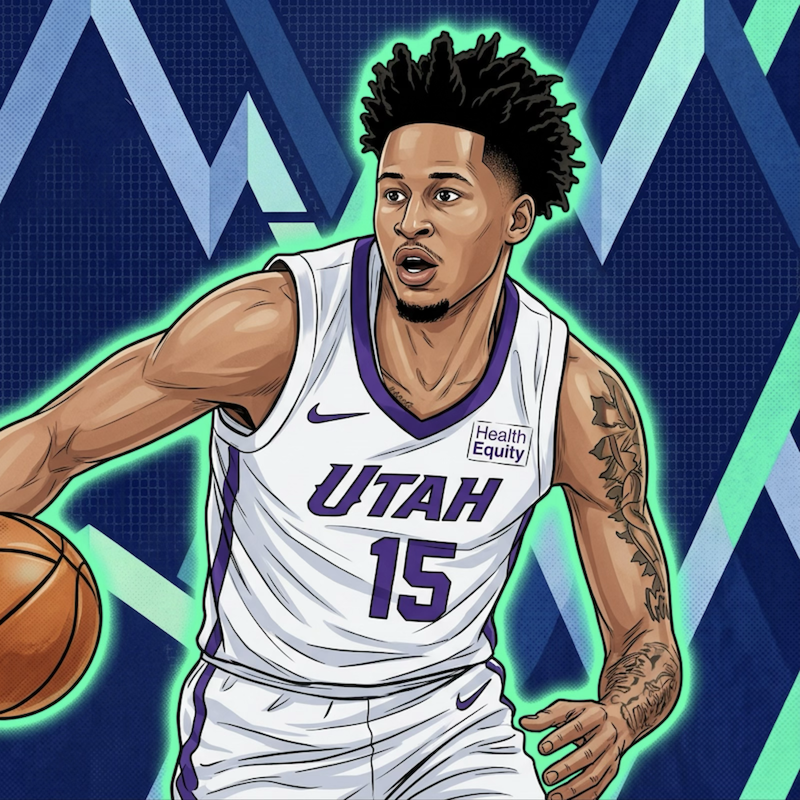
A wiry combo guard
who dominated high school basketball in Oklahoma, Alexander is looking for his first NBA rotation opportunity.
Three years at a mid-major (Kyle Korver's Creighton) weren't enough to get Alexander drafted, but he quickly earned a 2-way contract from Denver based on his play in the 2024 Summer League. He appeared in 33 games for the Nuggets and Pelicans, and closed last season with career-high games of 10 and then 16. Fun fact: he's a cousin of erstwhile Jazz star Mike Conley Jr.
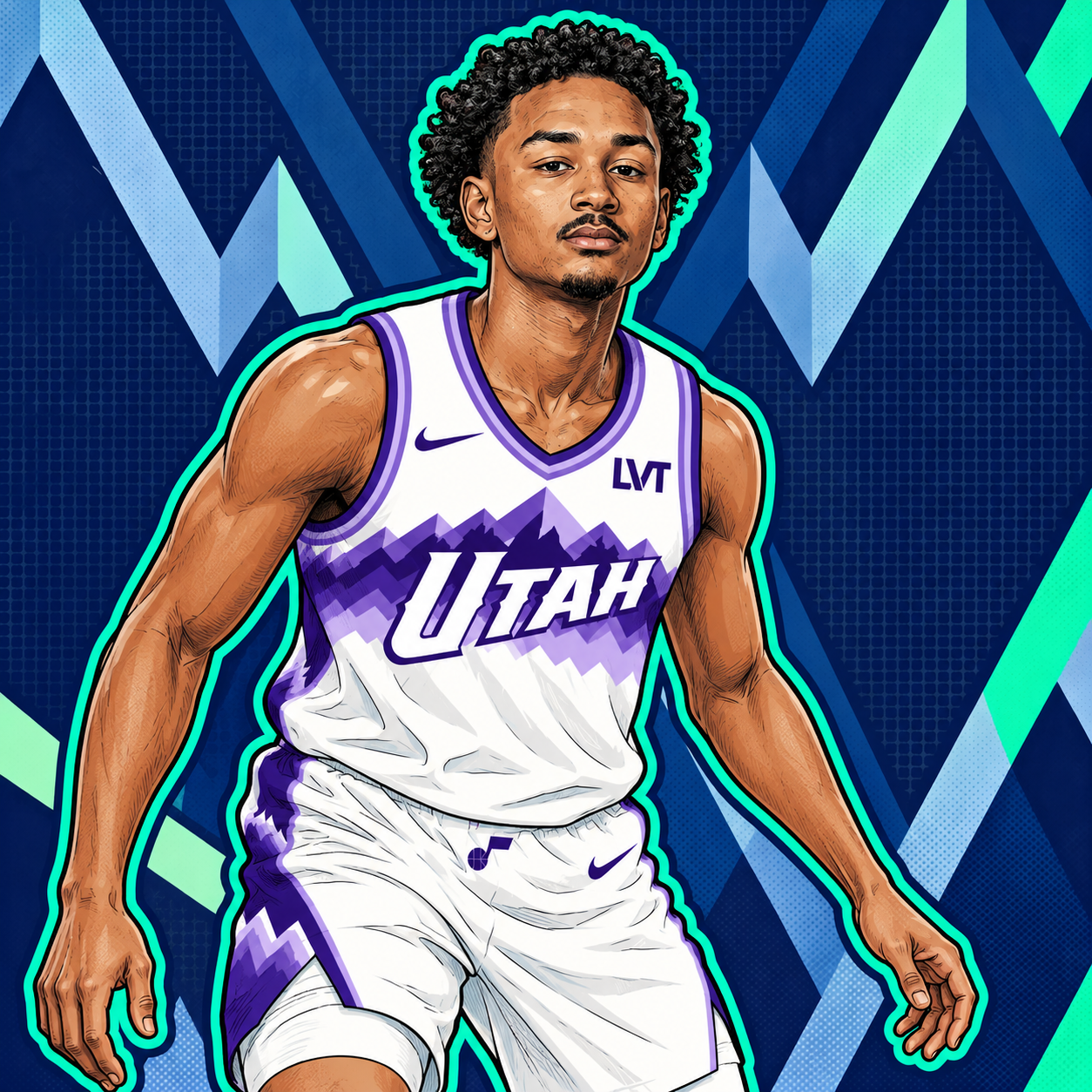
A defense-first combo guard
who has never really grabbed onto regular NBA minutes after being drafted 15th overall in 2023.
Bufkin showed enough improvement in his sophomore season at Michigan to get lottery buzz in the 2023 draft, eventually going one spot ahead of Keyonte George. The question about him was always about his ability to score in the pros, and his .437 true shooting through three seasons is still pretty worrying — although it's hard to find a rhythm when you rarely play. He has logged just 439 minutes for the Lakers and Hawks combined.


